Step 1: Verify the Credential Before Work Begins
- Ask for the technician's IICRC card. Each certified tech carries a registration number.
- Confirm the firm holds Certified Firm status, not just individual certs.
- Verify at least one WRT (Water Damage Restoration Technician) on site.
- For Category 3 losses, confirm ASD (Applied Structural Drying) or AMRT credentials.
- Cross check the number at iicrc.org before signing any work authorization.
- Request proof of continuing education. IICRC credentials require renewal, and lapsed cards are not valid for insurance billing.
- Confirm general liability and pollution liability coverage matches the scope of the loss.
Step 2: Initial Assessment and Category Classification
- Identify the water source within the first 15 minutes on site.
- Classify the water under S500 categories:
- Category 1: Clean water from a supply line or appliance fill.
- Category 2: Grey water with significant contamination (dishwasher discharge, washing machine overflow).
- Category 3: Black water from sewage, flooding, or prolonged exposure.
- Classify the loss by Class 1 through Class 4 based on evaporation load.
- Reclassify if water sits more than 48 hours. Category 1 degrades to Category 2, and Category 2 degrades to Category 3 over time.
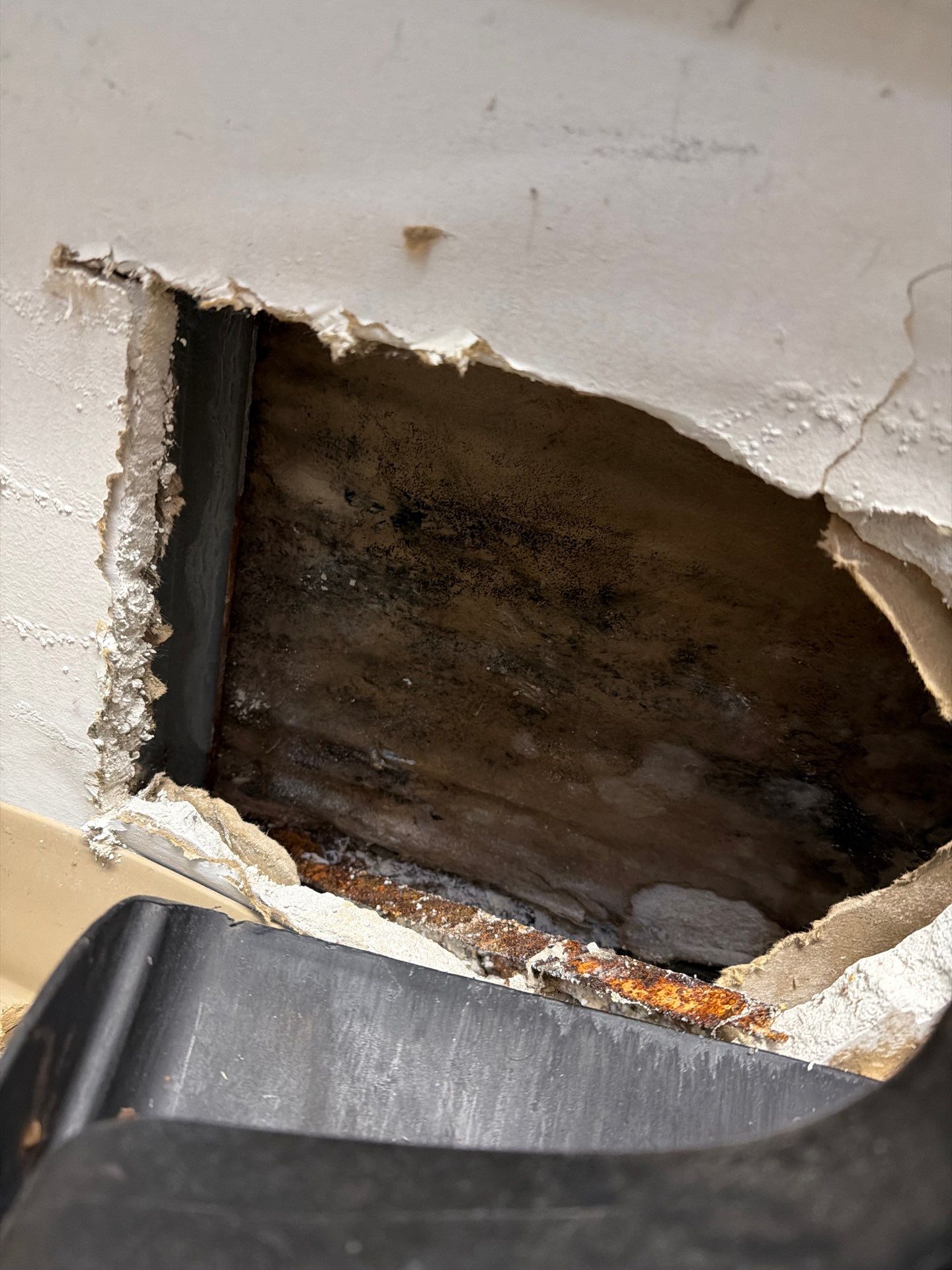
- Note any pre existing conditions (mold, prior leaks, deteriorated materials) that affect scope.
- Document the category and class in writing for the insurance file. Our team explains this in our Category 1, 2, and 3 water damage breakdown.
Step 11: What Certification Actually Guarantees the Property Owner
- A documented, defensible scope that aligns with insurer expectations under the S500 standard.
- Technicians trained to recognize hidden moisture migration, not just surface water.
- Proper category and class assignment, which directly drives the equipment count and demolition scope.
- Chain of custody records on contaminated materials, reducing liability for the property owner.
- A drying log that supports the claim if the carrier requests justification for the work performed.
Step 8: Daily Monitoring
- Return every 24 hours to record moisture content, GPP, temperature, and dew point.
- Reposition equipment based on remaining wet zones.
- Target a drying goal of 4 to 5 days for most Class 2 residential losses.
- Confirm subfloor and framing reach equilibrium with the dry standard, typically 12 to 16 percent moisture content for wood.
- Adjust the drying plan if readings plateau for 48 hours. A plateau usually signals trapped moisture or an undersized dehumidifier.
Step 5: Bulk Water Extraction
- Extract standing water within the first 60 minutes of arrival when possible.
- Use truck mounted or portable extractors rated at minimum 100 PSI for carpet.
- For hard surfaces, deploy submersible pumps when depth exceeds 2 inches.
- Weighted extraction on carpet removes up to 90 percent of absorbed water versus 50 percent for air drying alone.
- Document gallons removed when possible. This is the fastest path to lower drying time, covered in our water extraction services overview.
Step 7: Equipment Calculation and Placement
- Calculate cubic footage of the affected area: length x width x ceiling height.
- Air movers: one per 50 to 70 square feet of wet floor, angled at 15 to 45 degrees along walls.
- LGR dehumidifiers: one unit per 1,000 to 1,500 cubic feet for Class 2 losses.
- Maintain specific humidity between 35 and 55 grains per pound during active drying.
- Target indoor temperature between 70 and 90 degrees for maximum evaporation rate.
- For Class 4 losses (saturated hardwood, plaster, concrete), add a desiccant dehumidifier rated for the cubic footage.
- Verify circuit capacity. A standard 15-amp circuit handles 1 to 2 air movers plus one dehumidifier maximum.
Step 3: Safety, PPE, and Containment Specs
- Category 1 work requires nitrile gloves, safety glasses, and N95 minimum.
- Category 2 adds Tyvek suits and full face respirators with P100 cartridges.
- Category 3 requires full containment with 6-mil poly barriers and negative air at 4 to 6 air changes per hour.
- Shut off electrical at the panel to any affected circuit before extraction begins.
- Test for asbestos on any pre-1985 building materials before cutting drywall or removing flooring.
- Establish clean and dirty zones with poly walk off mats at every transition point.
- Photograph all conditions before any material is disturbed.
Step 6: Controlled Demolition Under S500
- Remove wet insulation in any wall cavity. Insulation does not dry in place reliably.
- Cut drywall 2 inches above the visible water line for Category 1, or 12 to 24 inches for Category 2 and 3.
- Remove laminate flooring when subfloor moisture exceeds 16 percent.
- Detach baseboards and drill weep holes at 16 inch centers if cavity drying is approved.
- Bag and dispose of Category 3 materials per local Upland solid waste rules.
Step 4: Moisture Mapping and Documentation
- Use a non penetrating moisture meter on all walls within 24 inches of the wet zone.
- Confirm readings with a penetrating pin meter on suspect materials.
- Record dry standard readings from an unaffected room in the same structure.
- Use thermal imaging to identify hidden migration paths behind walls and under flooring.
- Sketch a floor plan showing wet boundaries, equipment placement, and reading locations.
- Log every reading with location, depth, and timestamp. Upland adjusters expect this data.
Step 12: Red Flags That Indicate a Non-Certified Operator
- No moisture readings provided in writing, or readings taken only on day one.
- Equipment placed without a cubic footage calculation or psychrometric plan.
- Refusal to provide an IICRC registration number for verification.
- Use of consumer grade fans and refrigerant dehumidifiers on losses larger than a single room.
- No containment on Category 2 or 3 work, or antimicrobial applied before water classification.
- Flat rate pricing with no scope tied to S500 categories or classes.
Upland Water Restoration maintains IICRC Certified Firm status and dispatches WRT and ASD credentialed technicians on every Upland response. Certification is not a marketing label. It is the framework that drives every decision in the 10 steps above, from the first moisture reading to the final certificate.
If your loss involves sewage or contaminated water, the protocol tightens further. Review our black water Category 3 emergency cleanup walkthrough for the additional containment and disposal requirements that apply across Upland properties.
Step 10: Final Verification and Documentation Package
- Confirm three consecutive dry readings at the same location before equipment release.
- Issue a Certificate of Completion noting final moisture content values.
- Compile the drying log, photos, equipment list, and material inventory for the carrier.
- Review reconstruction scope, which begins only after the structure passes dry standard.
Step 9: Antimicrobial and Cleaning Protocol
- Apply EPA-registered antimicrobial only after Category determination.
- HEPA vacuum all affected surfaces before final wipe down.
- Detail clean any non porous content exposed to Category 2 or 3 water.
- For Category 3, follow biohazard handling per S500 Section 12.
- Record the product name, EPA registration number, dilution rate, and dwell time on the daily log.