What are the most common sources of kitchen water damage?
In Upland homes, the usual suspects are predictable. Supply lines under the sink fail at the braided connector, especially the cheap rubber-cored ones that come standard on many faucets. Dishwasher supply lines crack at the elbow behind the unit. Refrigerator ice maker lines, particularly the saddle-valve type, leak slowly for months before anyone sees water. Garbage disposals rust through at the bottom seam and drip every time the sink is used. P-traps loosen, sink basket strainers lose their plumber's putty, and dishwasher door gaskets harden and split.
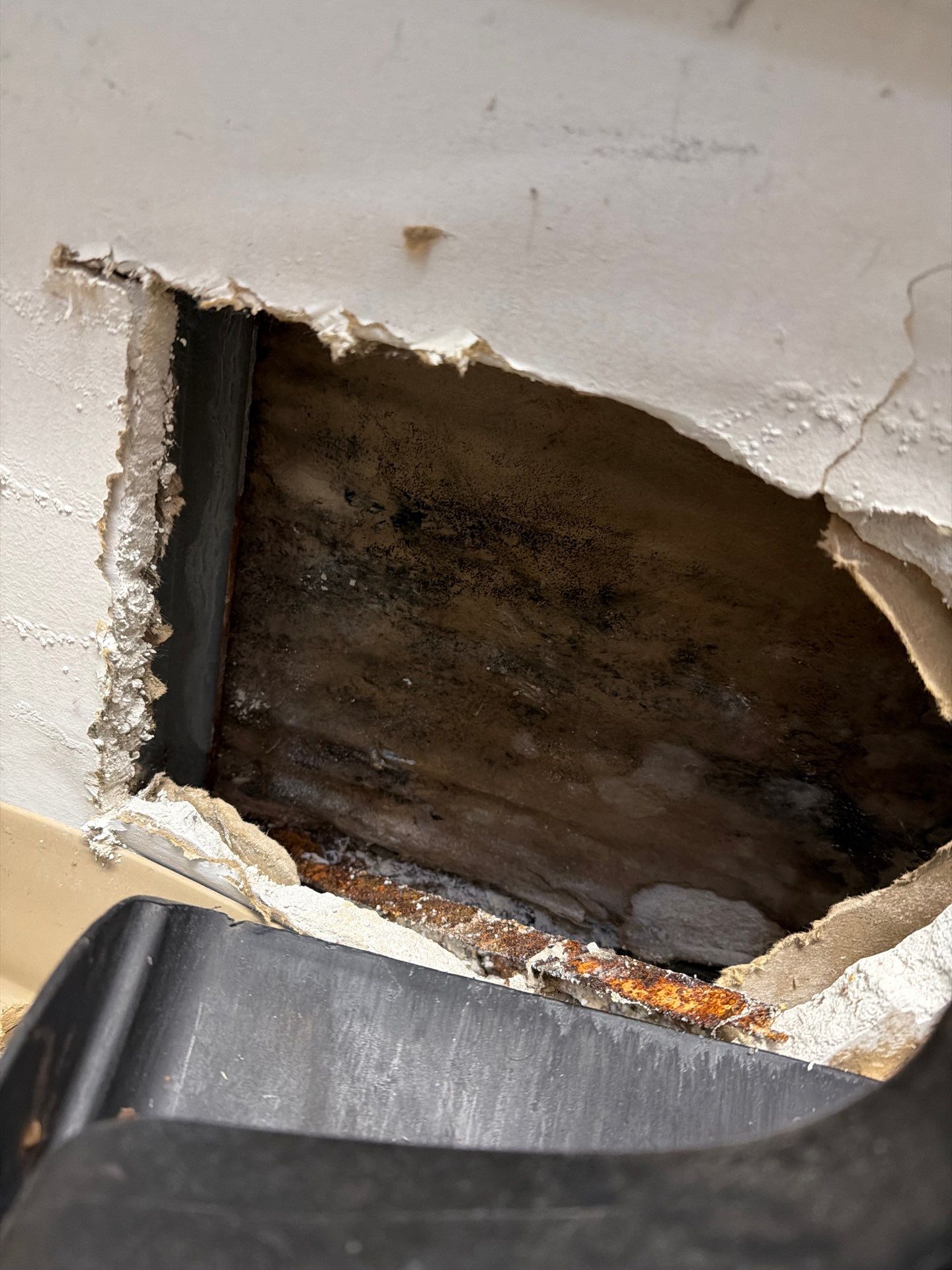
The pattern we see most often in older Upland neighborhoods is the slow drip behind a cabinet. Nobody hears it, nobody sees it, and the MDF cabinet base soaks up water like a sponge. By the time the homeowner notices a swollen kick plate or a musty smell, the subfloor underneath is already compromised. If you suspect something similar is happening behind drywall, our guide on water damage behind walls and hidden leak detection walks through how we find these leaks with thermal imaging and moisture meters.
Another source Upland Water Restoration technicians flag frequently is the reverse osmosis system tucked under the sink. Those small plastic fittings on the storage tank and faucet line are notorious for weeping. Pull-out sprayer hoses on newer faucets also fail at the quick-connect under the basin, usually two or three years after install when the O-ring stiffens. If your faucet has a sprayer that retracts, get down with a flashlight every few months and feel the hose for dampness.
How do I tell if it is a small leak or a real emergency?
Standing water on the floor is an emergency. So is any leak from a pressurized supply line, because those do not stop until the valve is closed. Shut the water off at the fixture stop or at the main, then call us. If the water is contained to a small puddle under the sink and the source is a slow drip from a drain, you have time to dry the cabinet, inspect for staining, and decide whether you need a professional moisture assessment.
The warning signs that the problem is bigger than it looks include cupping or darkening of hardwood floors near the sink, soft spots in vinyl or laminate, a sour or earthy smell when you open lower cabinets, peeling paint on baseboards, and warped cabinet kick plates. Any one of those points to water that has been present for at least several days. Two or more means you almost certainly have subfloor involvement.
Can I save my hardwood floors or do they need to be replaced?
It depends on three things: how long the water sat, whether the boards are solid or engineered, and whether the subfloor underneath is also wet. Solid hardwood caught within 48 hours and dried aggressively often recovers with light sanding and refinishing. Engineered hardwood is harder to save because the layers delaminate when wet. If the boards are cupping severely or crowning, replacement is usually the right call. We assess this case by case and tell you straight whether it is worth attempting the dry-out.
How long does it take to dry out a kitchen leak?
For a contained leak caught within 24 hours, we typically run air movers and a dehumidifier for 3 to 5 days. Cabinets often need to be detached from the wall and the toe-kick removed so we can dry the structural cavity behind and underneath. Subfloor drying adds 1 to 2 days. If hardwood flooring is involved and we are trying to save it, drying can run 7 to 10 days with daily moisture readings. We monitor with pinless meters and document every reading for your insurance file.
Why is dishwasher and fridge damage so often worse than it looks?
Both appliances sit flush against cabinets and flooring, which means leaks have nowhere to go but down and outward into the subfloor and adjacent cabinet bases. A dishwasher leaking a half cup of water per cycle will saturate the floor under it within a month, and you will see no surface evidence until the flooring buckles. Refrigerator ice maker lines tend to leak at the back wall behind the fridge, soaking drywall, baseboard, and the subfloor edge near an exterior wall, which in Upland winters can also freeze and worsen the damage.
We handle these scenarios constantly, and the repair scope varies wildly. A caught-early dishwasher leak might be a 3-day drying job at $1,200 to $1,800. A neglected one with subfloor rot and lower cabinet replacement can run $4,500 to $8,000. Our detailed breakdowns on dishwasher leak floor repair cover the specifics of what each scope includes.
One detail many homeowners miss: refrigerators with built-in ice and water dispensers have a small drip tray and condensate line that can clog and overflow internally, soaking the cardboard insulation panel at the back of the unit. That moisture migrates down to the floor over weeks. If you ever pull your fridge out and find a rust ring or warped flooring directly under the rear corner, that is almost always the cause, not the supply line.
Will my homeowners insurance cover kitchen water damage?
Sudden and accidental leaks are usually covered. A supply line that bursts overnight, a dishwasher hose that fails, an ice maker line that cracks: those are standard covered losses on most policies. What is generally not covered is long-term seepage, which insurers define as leakage that has been ongoing for 14 days or more. That is why early reporting matters. If you find a leak and wait two months to file, the adjuster has grounds to deny.
We document the loss thoroughly, photograph the source, take moisture readings, and provide a written scope that matches Xactimate language adjusters expect. We do not inflate claims, and we do not handle the claim for you, but we make the paperwork side of it straightforward. For a deeper look at pricing and how scopes are built, see our water damage restoration cost breakdown.
What can I do to prevent the next kitchen leak?
Replace rubber-cored supply lines with stainless braided ones every five to seven years, and swap dishwasher and ice maker lines on the same schedule. Install a simple battery-powered water sensor under the sink and behind the dishwasher. They cost about $15 each and will scream loud enough to hear from another room. Pull the fridge out once a year, vacuum the coils, and check the line for kinks or corrosion at the saddle valve. If your home is more than 20 years old, Upland Water Restoration recommends having a plumber walk the kitchen with you and tag any fittings that look fatigued.
What category of water am I dealing with under the sink?
This matters for insurance and for safety. IICRC defines three categories. Category 1 is clean water from a supply line or ice maker line, and it stays Category 1 for about 24 to 48 hours before bacteria growth bumps it to Category 2. Category 2 is grey water, which includes dishwasher discharge and sink drain water with food particles and detergent. Category 3 is black water, which is sewage or anything that has been sitting long enough to grow significant microbial contamination.
Most kitchen leaks start as Category 1 or 2. The problem is that water trapped under a cabinet for a week is no longer Category 1 no matter where it came from. That changes the cleaning protocol, the materials we have to remove rather than dry, and often the insurance conversation.