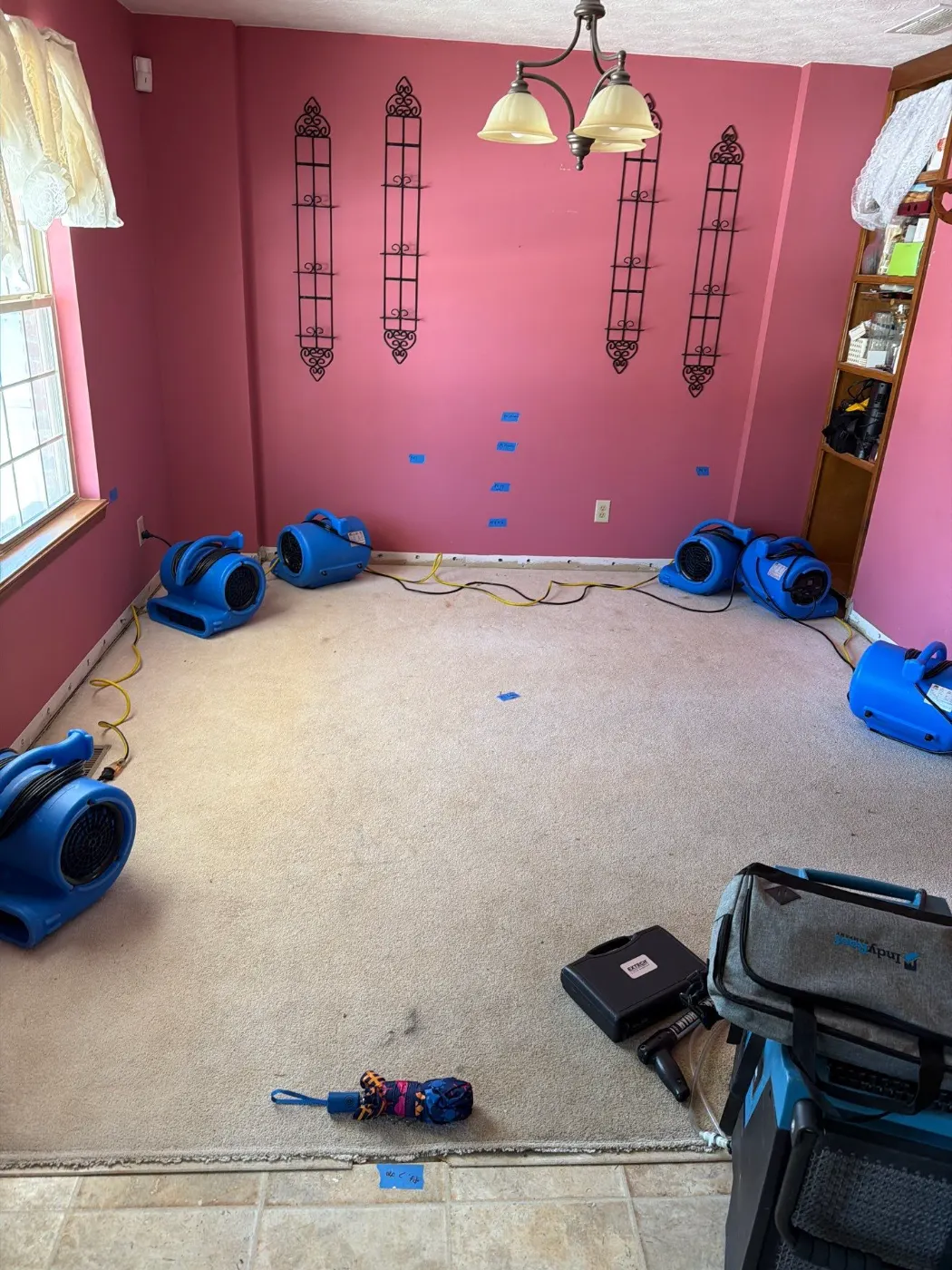
Commercial Storm Damage in Upland, IN
Commercial storm water intrusion in Upland stopped at the roof and dried to documented readings, with two hour dispatch.
Upland Water Restoration provides Commercial Storm Damage in Upland, IN. 24/7 emergency response with IICRC certified crews, and we work with your insurance carrier on approved claims. Call (765) 517-7678 for immediate dispatch.
- Service: Commercial Storm Damage for Upland homeowners
- Service area: Upland, IN and surrounding areas
- Response time: Around the clock dispatch; Upland emergencies move to the front of the line
- Licensed and insured (License #RC21100059)
- Serving Upland, IN since 2018
Commercial Storm Damage Cleanup in Upland
We'll secure and dry commercial buildings in Upland after a storm opens the roof or floods a lower level.
Storms Here
Upland sees tornado activity slightly above the Indiana average, which matters for roofs and glass on a commercial building. Spring and summer are severe thunderstorm season here. NWS Indianapolis posts summaries of past storms, which helps when your carrier asks for a date.
We respond to storm calls from businesses anywhere in Upland, including those around the Barton Rees Pogue Memorial Public Library and Eastbrook South Elementary School. We also handle commercial storm damage in Gas City, Marion, Matthews and Sweetser.
Commercial Storm Damage for Upland Businesses
Water's coming through the roof deck of your Upland building and the storm has already moved on. Ponded water over a failed drain finds the weakest seam and keeps feeding it long after the rain stops. Upland Water Restoration sends a crew to commercial water intrusion calls in Upland, IN within two hours with extraction units, dry in materials, and the moisture readings that tell you how far the water already traveled.
Water that crossed the dock apron or rose from outside gets handled as contaminated until the crew has established its category. Porous materials it soaked, such as carpet and insulation, are removed and bagged, and hard surfaces are cleaned before drying equipment goes in. Photos of the water line and the entry point at your Upland dock go in the file first.
Concrete and gypcrete hold water long after a surface looks dry. Upland Water Restoration crews measure them with in situ probes or a calibrated meter, then dry the slab with dehumidification capacity and air movement across the surface. Where flooring is going back down, the readings have to satisfy the flooring manufacturer's moisture limit, and those numbers go in the file with everything else.
You can authorize emergency mitigation before an adjuster has been out, and your policy may expect you to limit further damage, so check it or ask your broker. Upland Water Restoration gets a signed work authorization and a scope for the emergency phase, documents preexisting condition where it's visible, and keeps the mitigation invoice separate from reconstruction so each piece can be reviewed on its own terms.
Ownership is going to ask what this costs and how long the space is down. Call Upland Water Restoration and a crew dispatches to your Upland property, measures what's wet and gives you a drying timeline to work from. The team takes calls across central Indiana at any hour.
Signs You Need Commercial Storm Damage Restoration
If you notice any of these in your Upland building, schedule a free inspection before the issue worsens.
Water lines on the lower walls of a dock office or receiving area
Fan coil or convector cabinets along a window wall holding water at the bottom
Wet or stained carpet along an interior column line with no plumbing fixture anywhere near it
Light fixtures out in one zone of the ceiling grid after a storm, with the breaker holding
Stains that start at the top floor and reappear on the same wall two floors down
Water beading on the inside of curtain wall mullions or collecting on the sill
Cardboard cartons on the bottom pallet positions that have darkened and gone soft
Vinyl cove base curling or pulling away from the wall along an exterior wall
Daylight visible through a roof penetration curb or around the flashing at a rooftop unit
Insulation batts above the ceiling grid that are compressed, matted, or dripping at the edges
How Upland Water Restoration Handles Commercial Storm Damage
We follow these steps in order on every Upland job.
First Call Intake
On the call, the team gathers where the water is entering, which areas are occupied, who holds keys and alarm codes, and who can authorize work, so the crew shows up at your Upland property with the right equipment and the access it needs.
Daily Readings Logged
Each day brings temperature, relative humidity and material moisture readings logged against an unaffected baseline elsewhere in the building. Equipment moves based on what the numbers show. The property manager gets the readings and the photos the same day.
Midpoint Scope Review
Partway through the job, the crew compares the readings with the projected equipment period and tells the property manager if the schedule or the scope has moved. Added removal is photographed and explained before the work starts.
Equipment Out and Space Release
As each area reaches its dry goal, the equipment comes out of it and the space goes back to the tenant. The release date and final readings for every area go in the file.
Ceiling and Finish Rebuild
Grid gets releveled, new lay in tile goes in, and insulation is replaced to the assembly's original value. Painted surfaces get primed and finished to a line that reads as original, and flooring goes back once slab readings allow it.
Commercial Storm Damage in Upland
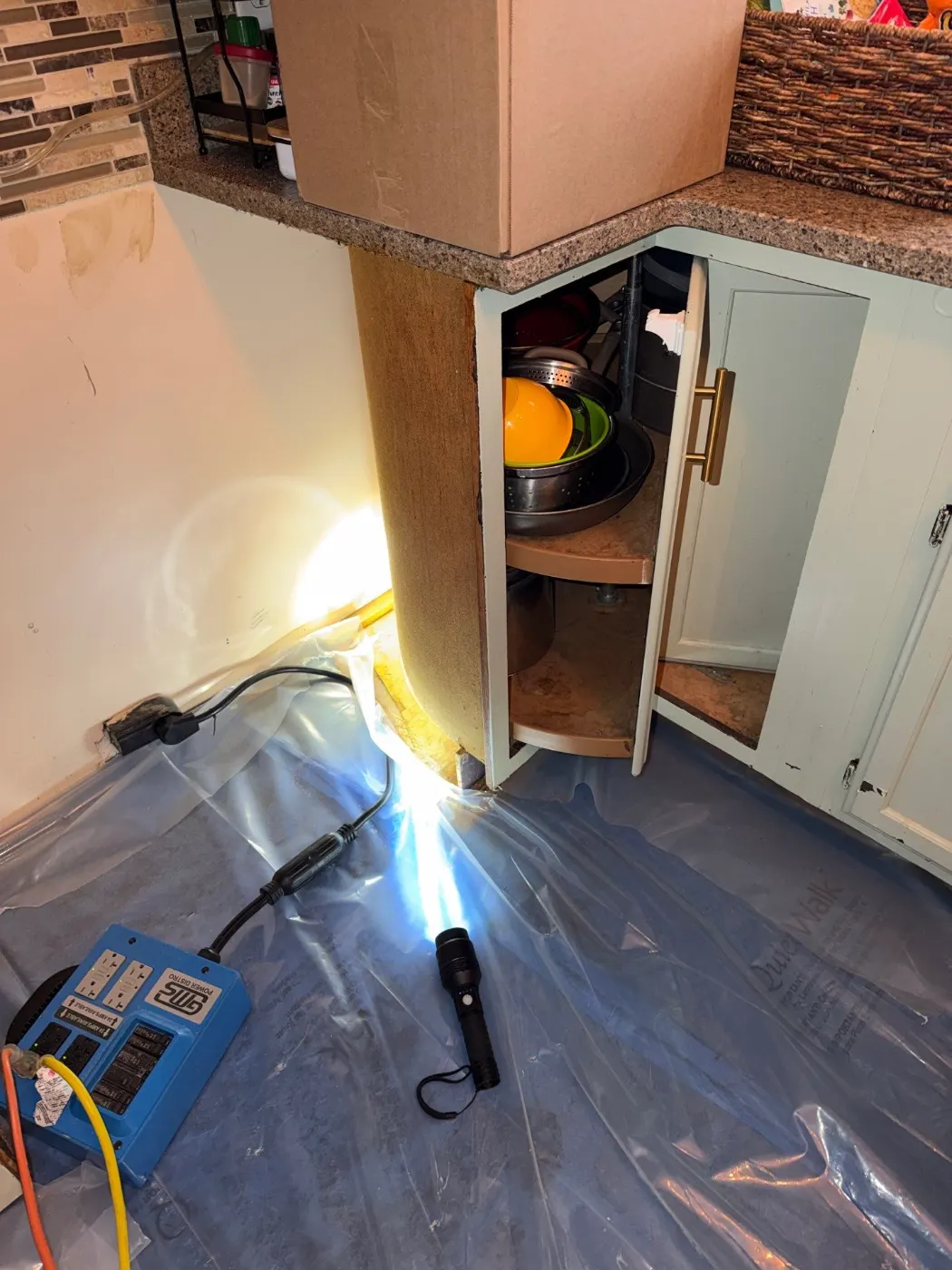
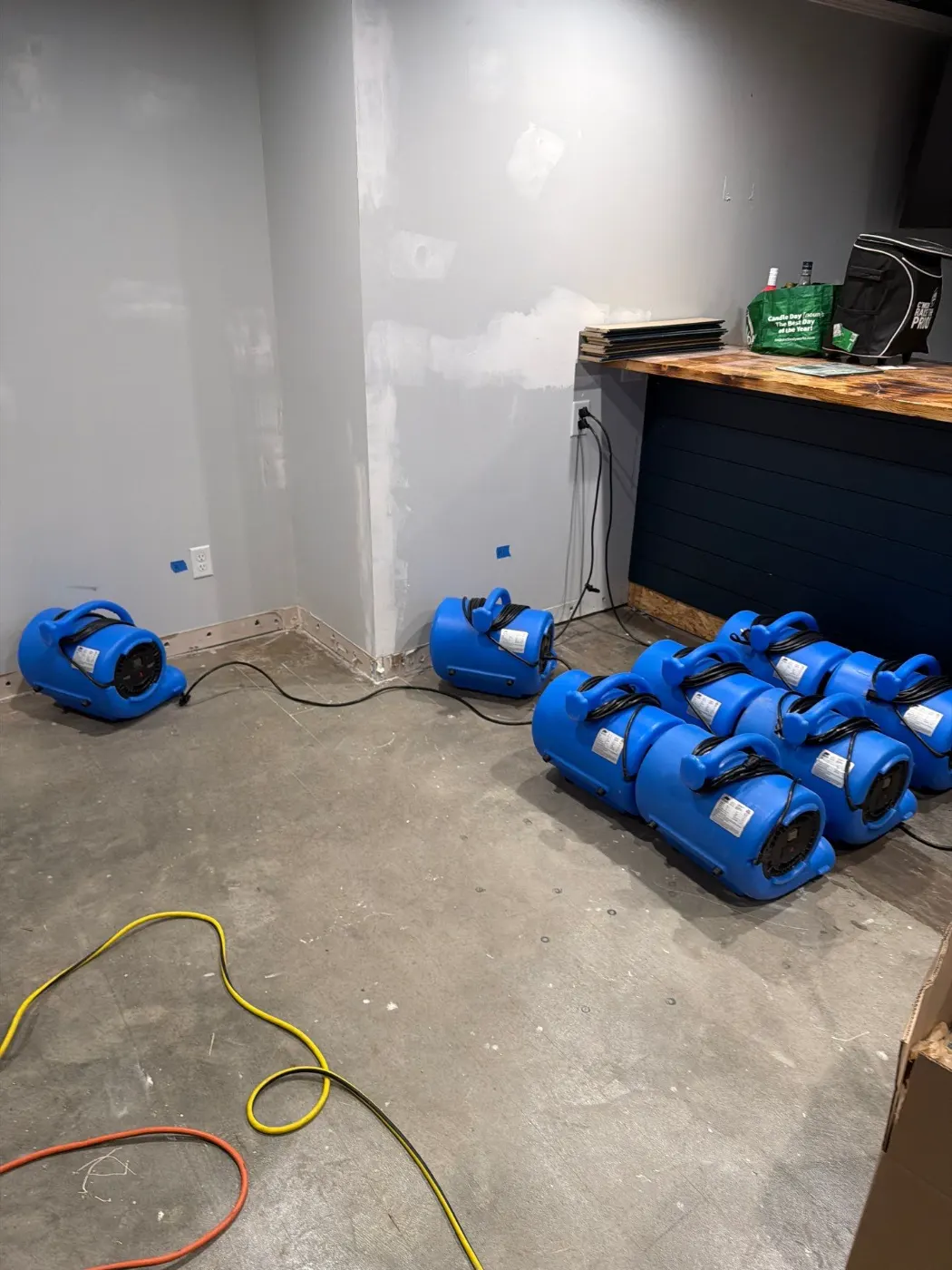
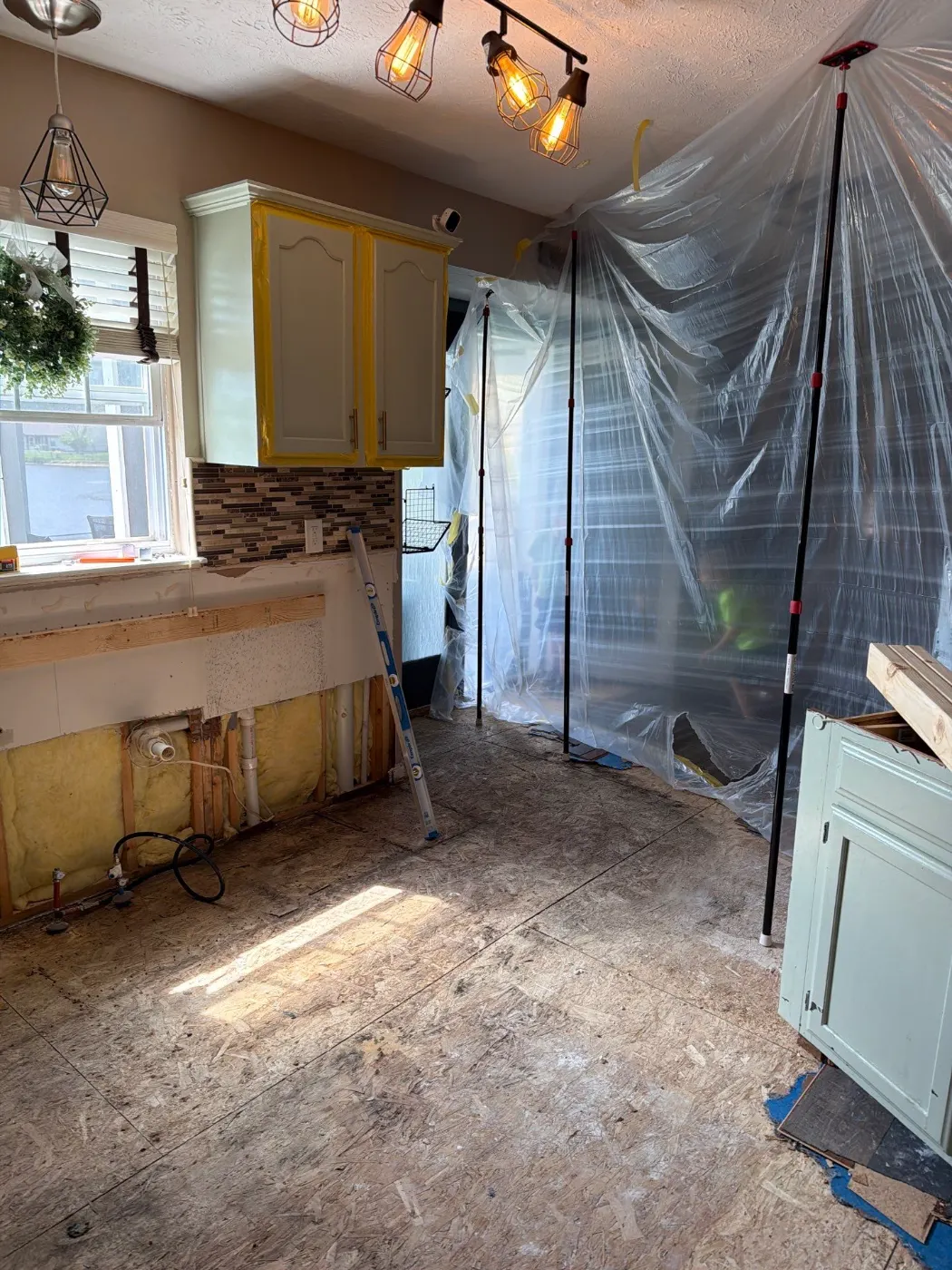
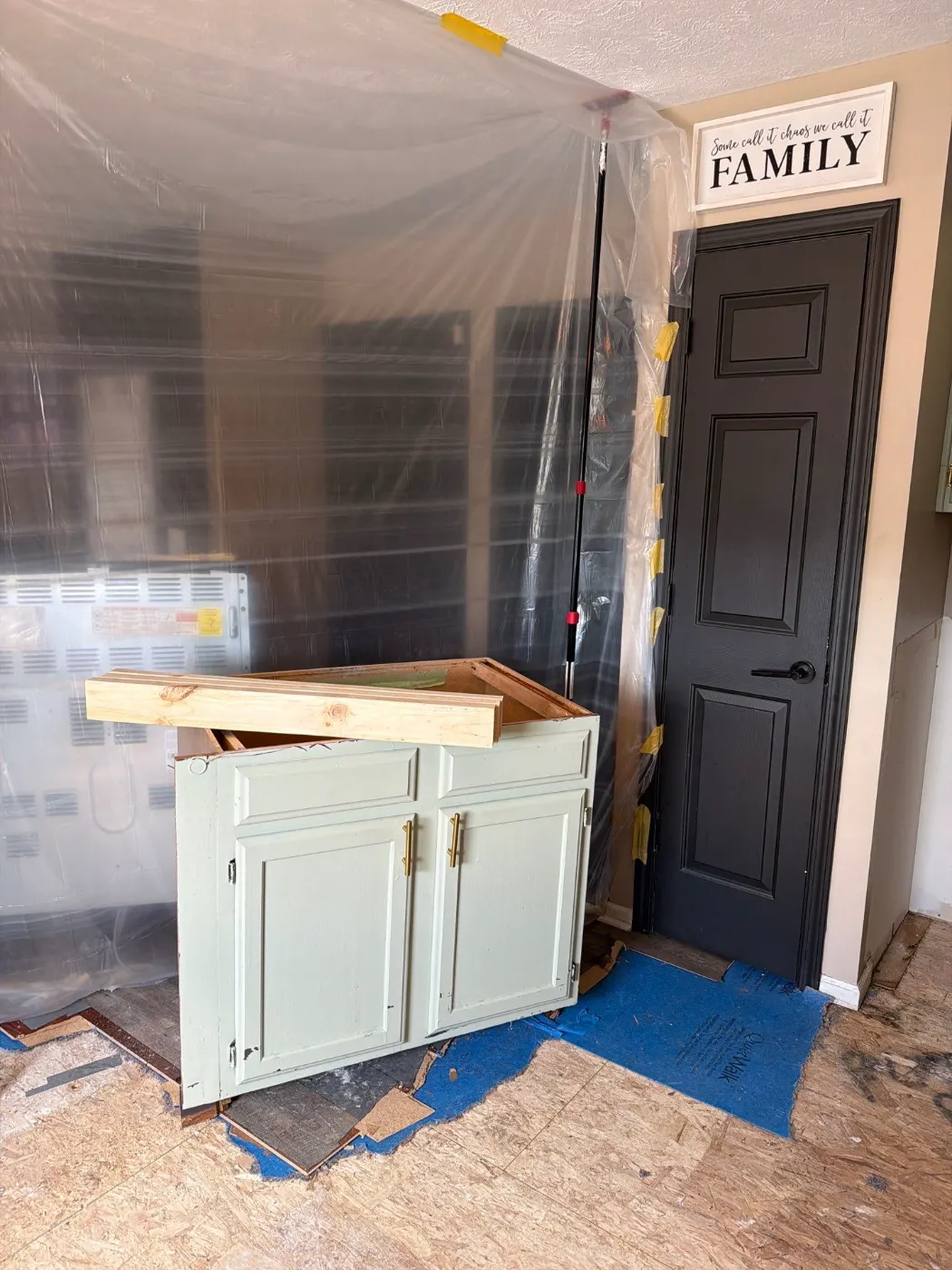
Photographs from real commercial storm damage jobs completed by our crew in Upland and surrounding areas.
Commercial Storm Damage FAQ
Questions Upland property managers ask us about commercial storm damage restoration.
Guidance and Standards for Commercial Storm Damage
- The National Weather Service office in Indianapolis posts summaries of recent central Indiana storm and flood events. NWS Indianapolis Event Summaries
- The ANSI/IICRC S500 is the published standard for professional water damage restoration. The current edition is the Fifth Edition, 2021. IICRC S500 Standard
Upland Neighborhoods We Serve
We take commercial storm damage calls in every part of Upland. Pick your neighborhood for local details.
Other Restoration Services in Upland
Upland Water Restoration handles the full scope of restoration work. Explore our other services below.
Water Damage Restoration in Upland
24/7 emergency response. IICRC certified water restoration from extraction to full dry out.
Learn more →Basement Flooding in Upland
Basement water emergencies handled fast. Extraction, drying, mold prevention.
Learn more →Sewage Cleanup in Upland
Category 3 biohazard cleanup. Full containment, decontamination, structural restoration.
Learn more →Request Commercial Storm Damage Restoration
Reach Us Directly
Our team is available 24/7 for emergencies and ready to schedule inspections during business hours.
Need Immediate Help?
For active water or mold emergencies, call us directly. We are available 24/7.